Wondering whether Carmel Point feels like a sleepy beach enclave, a design-forward coastal pocket, or simply one of the most private corners of Carmel-by-the-Sea? The truth is, it’s a little of all three. If you are thinking about buying here, visiting often, or weighing whether the setting matches your lifestyle, it helps to understand how daily life actually unfolds. Let’s take a closer look.
Carmel Point feels quiet by design
Carmel Point sits at the southern edge of Carmel-by-the-Sea, a city that has long prioritized a small-scale, pedestrian-friendly setting and the preservation of its residential character. That planning approach shows up in everyday life in subtle but important ways.
You notice it in the pace, the modest scale of the streetscape, and the way homes tend to sit back into the landscape rather than dominate it. Even in a globally recognized coastal destination, this part of town often feels intentionally understated.
The neighborhood feels tucked away
Part of Carmel Point’s personality comes from how unstandardized it can feel. Carmel is in the process of implementing a street-address system, but the city notes that draft street numbers are not yet finalized or official, and mail is still delivered to P.O. Boxes.
That detail says a lot about the area. Life here can feel slightly hidden, less rigid, and more personal than in a conventional neighborhood where everything is numbered, mapped, and easy to categorize.
Walks shape the daily routine
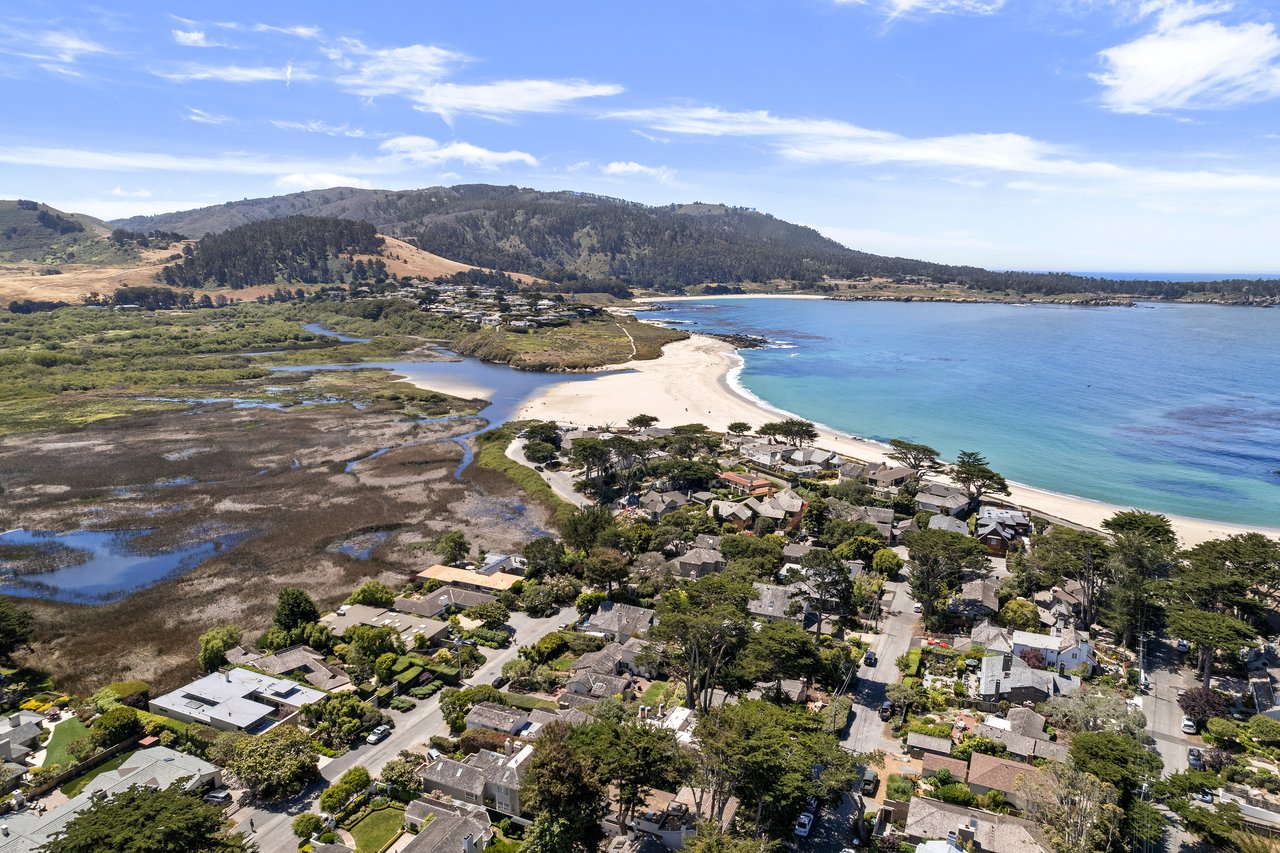
For many people, the rhythm of life at Carmel Point starts outdoors. Carmel Beach is city-maintained and known for its bright white sand, with nine access stairways connecting Scenic Pathway to the beach.
That means beach walks are not a special occasion. They can become part of an ordinary morning, an afternoon reset, or a simple end-of-day routine.
Carmel Beach is part of everyday living
Carmel Beach has a distinctly local feel. Dogs are allowed off leash there if they remain under voice control, while they must be leashed on Scenic Pathway and elsewhere in town.
Those rules help create a beach culture that feels active and lived-in rather than purely visitor-focused. You are as likely to picture daily walkers and dog owners as you are a postcard view.
Scenic Pathway adds a second layer
Even if you are not heading down to the sand, Scenic Pathway adds another way to experience the coastline. It gives residents a chance to move through the neighborhood on foot while staying closely connected to the ocean setting.
That matters in a place where the natural environment is a major part of the appeal. Everyday movement feels tied to the shoreline, not separated from it.
Evenings center on sunsets, not noise
Just south of town, Carmel River State Beach adds another outdoor option with a mile-long beach and a lagoon bird sanctuary. It is open for day use from 8 a.m. to sunset, and dogs are allowed on leash.
State Parks also prohibits beach fires on Monterey District state beaches. In practical terms, that means evenings in this part of the coast tend to lean toward walking, pausing, and watching the light change rather than gathering around bonfires late into the night.
Coastal weather stays part of the experience
The coast here can shift quickly, and layered clothing is advised. That may sound like a small thing, but it shapes daily life more than many buyers expect.
A sunny start can turn breezy and cool by late afternoon. In Carmel Point, being comfortable outdoors often means being prepared for change rather than expecting one steady weather pattern all day.
Homes tend to fit the landscape
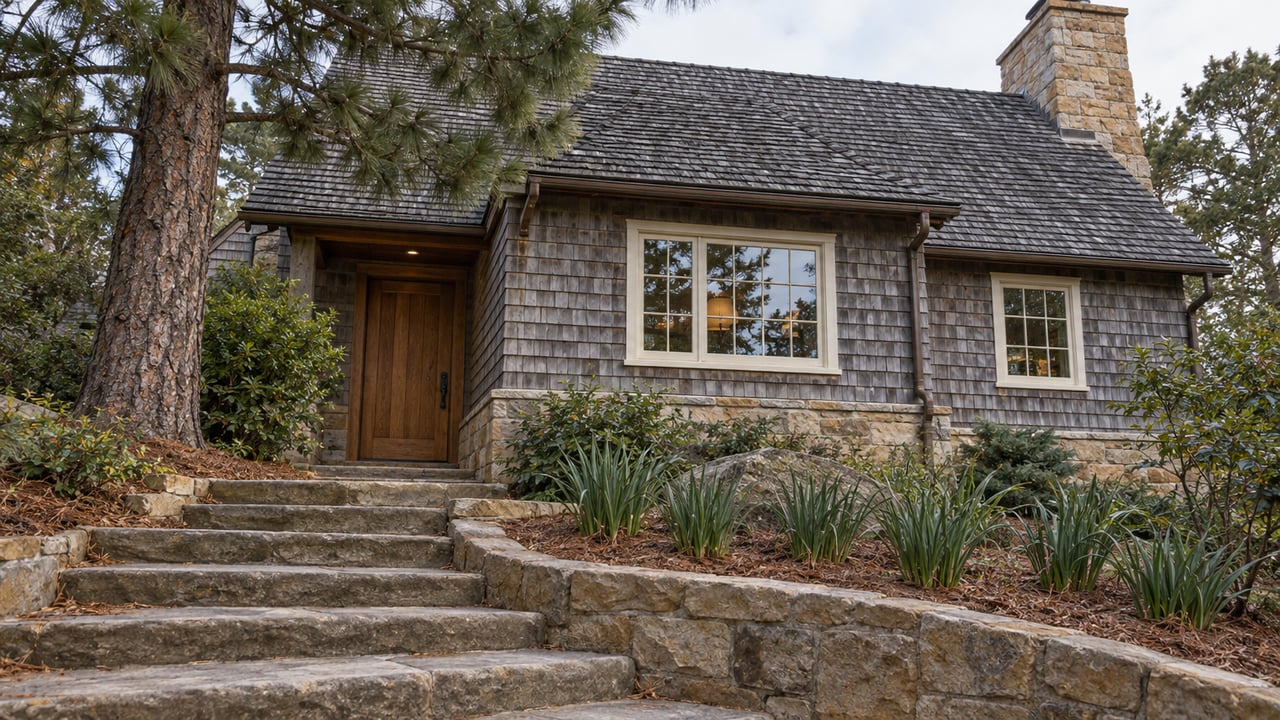
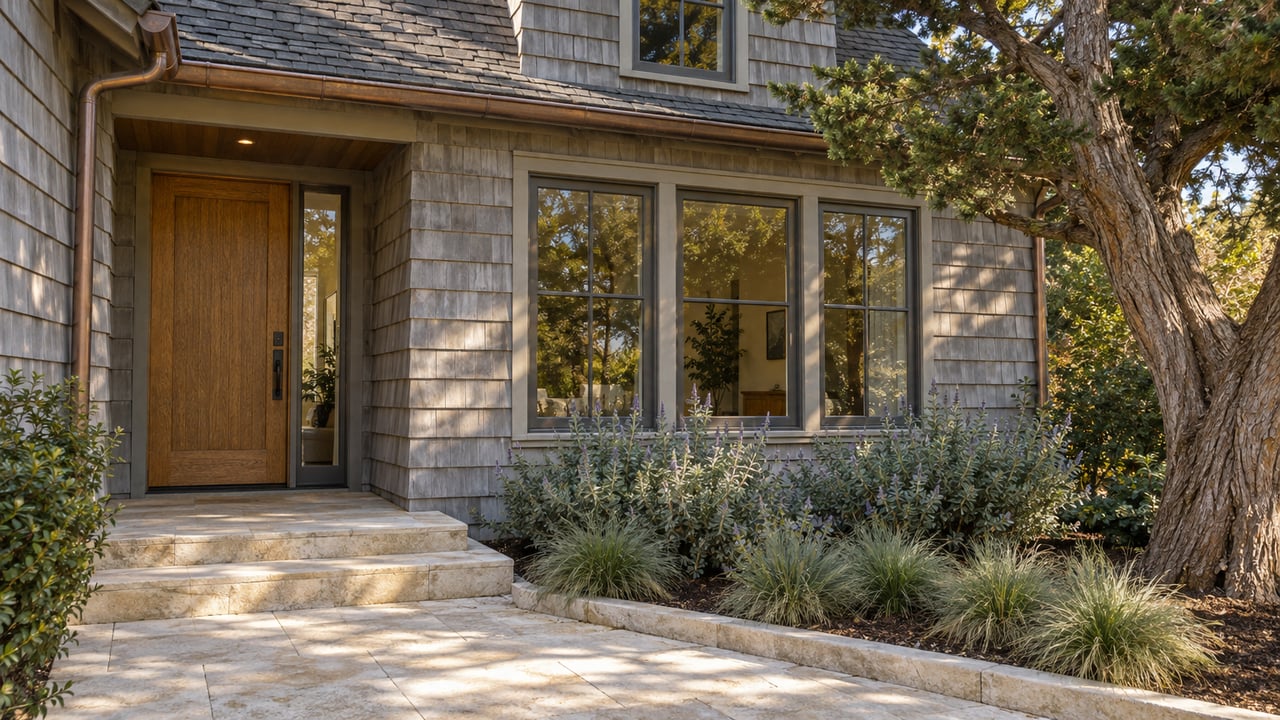
One of the clearest things you feel in Carmel Point is that many homes are meant to belong to the setting, not compete with it. Carmel’s residential design traditions have long favored smaller, simpler houses with restrained massing, wood framing and cladding, and relatively low or intermediate roof pitches.
Trees and informal gardens also play an important role in the streetscape. As a result, the neighborhood often feels softened by vegetation and shaped as much by landscape as by architecture.
Cottage character is only part of the story
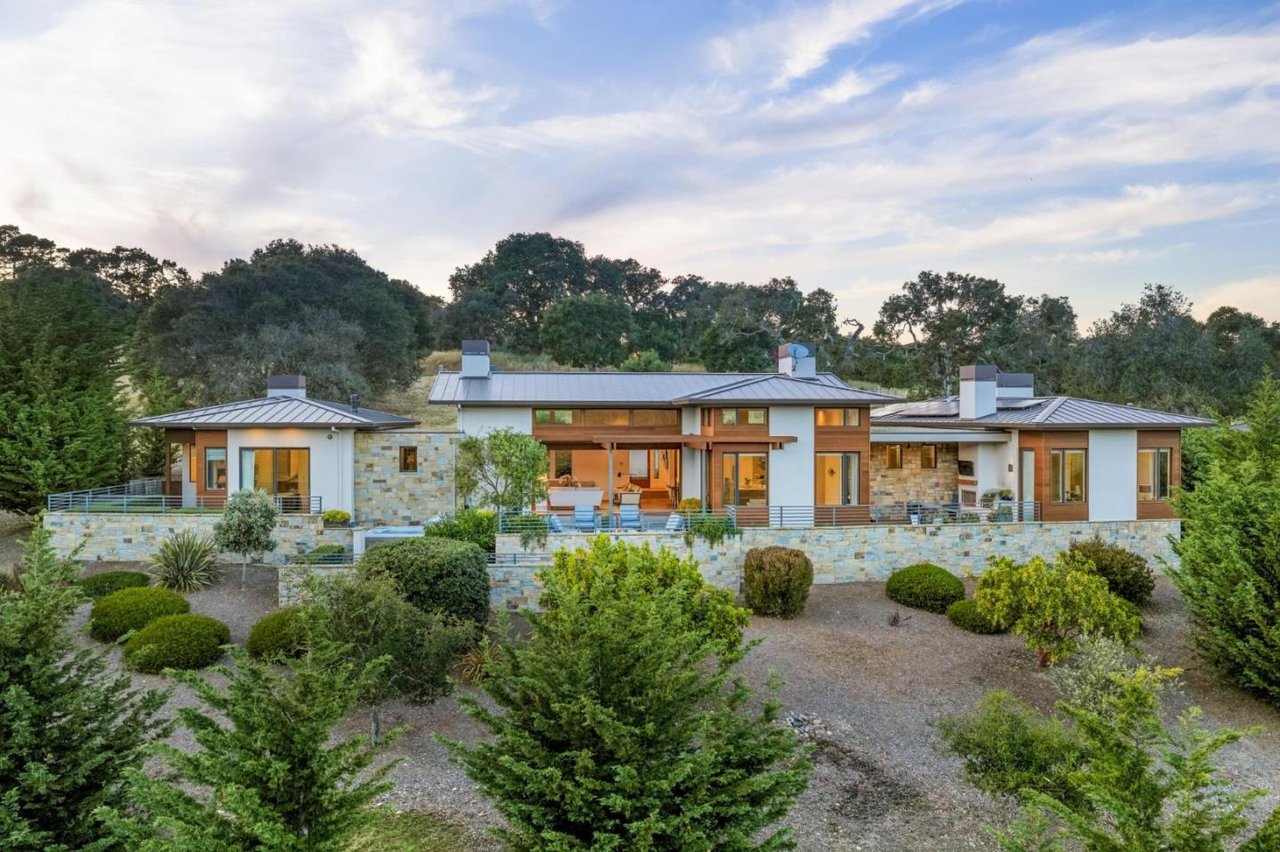
Many people associate Carmel with cottages, and that influence is real. But Carmel Point also has a stronger architectural profile than some buyers first realize.
The city’s historic context identifies Tor House, the Walker House, and the Butterfly House as important examples tied to the area’s coastal design history. So while the neighborhood includes smaller homes and quiet lanes, it also carries serious architectural significance.
Lot sizes influence how homes live
If you spend time studying Carmel Point real estate, you quickly see that everyday life here is not about oversized houses or broad suburban lots. Monterey County coastal zoning in the Carmel area sets a 6,000-square-foot minimum building site in the MDR/2 district, while county records note that many Carmel Point lots are around 4,000 square feet.
That mismatch helps explain why the neighborhood often feels compact and why many parcels are effectively nonconforming by today’s rules. It is one reason homes here can feel intimate, efficient, and highly site-specific.
Changes often require careful planning
In Carmel Point, exterior changes are rarely casual. The city says most building or site alterations require some level of review, and historic properties may require added review under the Secretary of the Interior’s Standards.
That review structure helps preserve the area’s low-key character. It also means buyers who want to remodel, expand, rebuild, or change a site should expect a process that requires patience and a clear understanding of local standards.
Luxury here means scarcity and setting
Carmel-by-the-Sea is firmly in luxury territory. Spring 2026 market data placed average home value around $2.33 million on Zillow, while Redfin and Realtor.com reported median sale prices around $4.4 million and $4.19 million.
Those figures measure the market differently, but they point to the same conclusion. This is a high-price, limited-supply environment where the setting carries real value.
Buyers are often paying for a feeling
At Carmel Point, price is not usually driven by square footage alone. Buyers are often paying for privacy, beach access, village scale, coastal atmosphere, and in some cases architectural pedigree.
That can make the neighborhood especially appealing if you want a quiet coastal base rather than a conventional suburban layout. For many buyers, the appeal is less about having more house and more about living in a very specific kind of place.
Who Carmel Point tends to fit best
Carmel Point can be a strong fit if you value walkability, ocean proximity, and a home that feels connected to its surroundings. It may also appeal if you are looking for a second home or retirement-oriented lifestyle with easy access to the broader Carmel experience.
At the same time, it helps to be comfortable with the tradeoffs. Homes and lots may be smaller than you would find in other luxury markets, and future changes to a property may require thoughtful planning and review.
Why local guidance matters here
On paper, Carmel Point can look simple: beachside homes in a small, prestigious market. In practice, it is more nuanced than that. Lot configuration, design review, historic context, and the character of the streetscape all influence how a property functions today and what may be possible over time.
That is why local context matters so much. If you are buying or selling in a neighborhood like this, understanding the feel of the area is only one part of the equation. Understanding the built environment, the review framework, and how buyers interpret value is just as important.
If you are considering Carmel Point and want guidance grounded in real neighborhood experience, Bambace Peterson can help you evaluate the lifestyle, the market, and the property details with clarity and discretion.
FAQs
What does everyday life in Carmel Point feel like?
- Everyday life in Carmel Point tends to feel quiet, coastal, and walkable, with beach access, scenic walks, and a small-scale residential setting shaping the daily rhythm.
Is Carmel Point part of Carmel-by-the-Sea?
- Yes. Carmel Point is the south-edge coastal neighborhood within Carmel-by-the-Sea, which is a compact city of about one square mile.
Are homes in Carmel Point usually large?
- Not typically. Many homes reflect Carmel’s tradition of smaller-scale residential design, and lot-size constraints help explain the area’s compact footprints.
Can you walk to the beach from Carmel Point?
- In many cases, beach access is a major part of the lifestyle, with Carmel Beach connected by nine access stairways from Scenic Pathway.
Are dogs allowed at beaches near Carmel Point?
- Yes, but the rules vary. Carmel Beach allows dogs off leash under voice control, while Carmel River State Beach allows dogs on leash.
Is remodeling in Carmel Point straightforward?
- Usually not. The city says most building or site alterations require some level of review, and historic properties may require additional review.
Is Carmel Point considered a luxury market?
- Yes. Carmel-by-the-Sea market data from spring 2026 shows a high price floor, with reported values and sale prices solidly in the luxury range.
Who tends to buy in Carmel Point?
- Carmel Point often appeals to buyers seeking privacy, coastal access, village scale, and a distinctive setting rather than oversized homes or conventional suburban lots.