Dreaming about a storybook cottage near the coast? In Pacific Grove, that dream can be very real, but buying a vintage home here takes more than falling in love with charm alone. If you are considering an older cottage in this distinctive Monterey Peninsula market, it helps to understand what makes these homes special, what to look for before you buy, and where the biggest surprises can hide. Let’s dive in.
Why Pacific Grove cottages stand out
Pacific Grove has deep roots as a seaside retreat, and that early history still shapes the housing stock you see today. What began with small lots intended for tents gradually evolved into rows of compact cottages and larger homes, creating one of the Peninsula’s most recognizable historic settings.
The city’s Historic Resources Inventory includes more than 1,300 buildings, and local history sources describe Pacific Grove as having more than 1,000 Victorian homes and cottages. You will also see more than 500 homes with green plaques that recognize historic ownership and build dates, which reflects just how strong the local preservation culture is.
That preservation mindset matters when you buy. Pacific Grove’s historic framework is not just about aesthetics. It is part of how the city protects historic neighborhoods and existing housing through preservation and adaptive reuse.
Where vintage cottages are found
Many of Pacific Grove’s early residential blocks are concentrated in the central city and in the original Retreat area north of Lighthouse Avenue. In these areas, it is common to see Victorian homes alongside houses from the 1910s and 1920s on the same street.
Scattered examples also appear in Hillcrest, Beach Tract, and Pacific Grove Acres. For buyers, that means your search may include very different streetscapes, lot patterns, and home styles depending on where you focus.
This mix is part of the appeal. A vintage cottage in Pacific Grove is often as much about location and setting as it is about square footage.
What a vintage cottage looks like
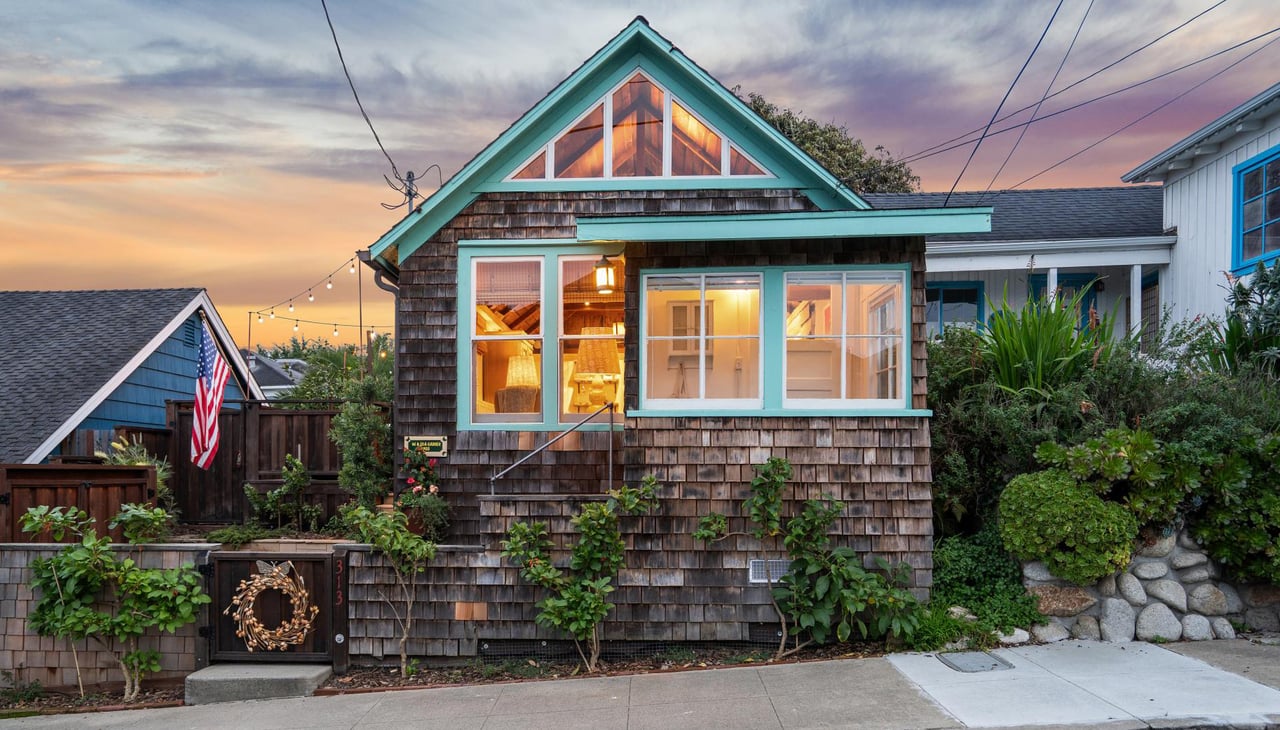
Many Pacific Grove Victorian-era cottages share a few common traits. You will often find simple rectangular forms, front-facing gable roofs, wood-frame construction, and older siding materials such as board-and-batten or channel-drop siding.
Queen Anne cottages tend to feel a little more decorative. These homes are often larger and more asymmetrical, with details like bay windows, hip roofs, patterned shingles, and spindlework porches.
By the early 1900s and 1920s, many smaller houses in Pacific Grove remained one story and wood-framed, but exterior finishes and details began to shift. Some homes from that period feature shiplap, bevel, novelty siding, or stucco, which helps explain why one cottage can look quite different from the next even on the same block.
Expect compact layouts and efficient footprints
If you are moving from a newer home, one of the first adjustments may be scale. Pacific Grove’s original lots were small, and many cottages were built close together, often with efficient layouts that made the most of limited space.
That can translate into charming but compact interiors, smaller rooms, steeper stairs, loft spaces, or less storage than you might expect in a newer property. A documented 1890 cottage example at 222 6th Street is just 911 square feet, with two bedrooms, two baths, and a loft bedroom.
For some buyers, that smaller footprint is part of the appeal. For others, it is a reminder to think carefully about how you actually plan to live in the home day to day.
Updates can change the character
Not every vintage cottage will feel frozen in time. Pacific Grove has a long history of updating older homes, and the city’s historic context notes that some Victorian houses were remodeled with Mediterranean Revival influences in the 1920s.
That history is useful because it shows that change is possible, but it can also affect what gives a home its historic identity. A cottage may have original bones with later additions, altered finishes, or a mix of architectural periods.
When you tour homes, look beyond surface finishes. Try to understand which features appear original, which feel more recent, and whether the updates support the home’s overall character.
Historic review matters before you remodel
This is one of the most important things to understand before buying a vintage cottage in Pacific Grove. If a house is on the Historic Resources Inventory, ordinary maintenance and repair are allowed, but additions and exterior alterations require city approval, even when a building permit might not otherwise be required.
The city specifically calls out changes such as:
- Building profile changes
- Window or door opening changes
- Adding new windows or doors
- Changes to roof materials
- Changes to wall materials
- Changes to trim materials
In practical terms, that means you should not assume a future exterior remodel will be simple. If you are buying with plans to expand, rework openings, or materially change the exterior appearance, it is wise to understand the review process early.
Windows, doors, and original materials deserve attention
Historic homes often come with older wood-sash windows, wood doors, and original trim details that contribute heavily to their character. Pacific Grove’s review process is guided by the city’s architectural review framework and the Secretary of the Interior’s Standards for Rehabilitation.
That is important because replacement is not always viewed the same way as repair. Guidance referenced by the city indicates that deteriorated historic windows should generally be repaired rather than replaced, and if replacement is needed, it should match the original design and visual qualities.
For buyers, this has both design and budget implications. Seemingly simple update ideas may require a more thoughtful approach than they would in a non-historic property.
Lead paint questions are essential
Many Pacific Grove cottages were built long before 1978, so lead-based paint due diligence is a must. For pre-1978 homes, sellers and landlords must disclose known lead-based paint information, and renovation work that disturbs painted surfaces must follow lead-safe work practices.
As a buyer, ask clear questions about:
- Known lead-based paint disclosures
- Past interior or exterior paint work
- Whether renovation work disturbed painted surfaces
- Whether contractors used lead-safe practices when needed
This is especially important if you plan to remodel soon after closing. Even cosmetic projects can become more involved in an older home.
Coastal risk should be checked by parcel
Pacific Grove’s coastal setting is a major part of its appeal, but it also adds an important layer of due diligence. The city’s GIS mapping includes the coastal zone, potential erosion hazard zone 2100, potential flood hazard zone 2100, and tsunami area.
That does not mean every cottage faces the same exposure. It does mean buyers, especially those considering ocean-adjacent locations, should verify property-specific risk rather than make assumptions based on a general neighborhood impression.
A cottage with postcard charm can still require serious review of site conditions. This is one area where local knowledge and careful property research really matter.
Seismic readiness should stay on your list
Older homes often need a second look when it comes to earthquake preparedness. Guidance from the California Earthquake Authority notes that older houses should be considered for seismic retrofit, with common measures including bracing cripple walls and bolting the house to the foundation.
That does not mean every vintage cottage has a problem. It does mean buyers should evaluate whether seismic improvements have already been made or may be worth considering after purchase.
For many buyers, this is part of balancing character with long-term resilience. A thoughtful purchase plan looks at both.
How cottages compete in today’s market
Pacific Grove remains a competitive market, but the data shows that conditions can look slightly different depending on the source and time frame. Redfin reported a median sale price of $1.36 million and a median of 20 days on market over the three months ending May 2026, while Realtor.com reported a median listing price of $1.65 million, 37 median days on market, and a 98% sale-to-list ratio for May 2026.
Inventory is also limited. Zillow showed 49 homes for sale and 17 new listings as of May 31, 2026, while Realtor.com reported 57 active listings.
That matters because buyers shopping for a vintage cottage are not comparing against a large supply of new homes. New construction is especially scarce, with Realtor.com listing just one new-construction home for sale in Pacific Grove at a median listing price of $1.5 million.
Vintage versus newer homes
A vintage cottage and a newer Pacific Grove home often offer very different experiences. The documented 1890 cottage at 222 6th Street is a 911-square-foot wood-frame home, while a 2020-built example at 107 20th Street is 1,932 square feet with three bedrooms and two-and-a-half baths.
That kind of contrast helps explain why simple price rules rarely tell the full story. Buyers are often weighing charm, location, lot size, renovation quality, and lifestyle fit more than just age alone.
In Pacific Grove, vintage cottages tend to stand out because of scarcity, character, and sense of place. Newer alternatives exist, but they are not abundant enough to make the decision feel purely numerical.
Smart questions to ask before you buy
Before you move forward on a vintage cottage, keep your due diligence focused and practical. A careful review now can help you avoid costly surprises later.
Consider asking:
- Is the property listed on the Historic Resources Inventory?
- What exterior changes have been made, and were they approved?
- Are there original windows, doors, siding, or trim still in place?
- What do seller disclosures say about lead-based paint?
- Have there been seismic retrofit improvements?
- Is the parcel in a mapped coastal, flood, erosion, or tsunami zone?
- How do the home’s layout and storage fit your actual needs?
These questions can help you move from emotional reaction to confident decision-making.
Buying with a local strategy
A vintage cottage purchase in Pacific Grove is rarely a plug-and-play transaction. The right home may need a sharper eye for condition, review constraints, future improvements, and market positioning than a newer property would.
That is why local context matters so much. When inventory is limited and no two cottages are exactly alike, buyers benefit from clear guidance on value, property history, neighborhood patterns, and what to expect after closing.
If you are considering a vintage cottage in Pacific Grove, the team at Bambace Peterson can help you evaluate the details, weigh the tradeoffs, and find a home that fits both your lifestyle and your long-term goals.
FAQs
What makes a Pacific Grove cottage vintage?
- In Pacific Grove, vintage cottages are typically older homes from the Victorian era through the early 1900s and 1920s, often with wood-frame construction, compact layouts, and traditional architectural details.
Where are vintage cottages most common in Pacific Grove?
- Many early cottages are found in the central city and in the original Retreat area north of Lighthouse Avenue, with additional examples in Hillcrest, Beach Tract, and Pacific Grove Acres.
Do historic Pacific Grove cottages have remodeling restrictions?
- Yes. If a home is on the Historic Resources Inventory, ordinary maintenance is allowed, but additions and many exterior alterations require city review and approval.
Should you worry about lead paint in a Pacific Grove cottage?
- You should treat it as an important due diligence item for pre-1978 homes, including reviewing disclosures and asking about past renovation work that may have disturbed painted surfaces.
Are coastal hazards an issue for Pacific Grove cottages?
- Some parcels may be affected by mapped coastal, erosion, flood, or tsunami risk areas, so buyers should verify property-specific conditions rather than assume all cottages face the same risk.
How does a vintage cottage compare with a newer Pacific Grove home?
- A vintage cottage often offers more character and historic appeal, while a newer home may offer more square footage and modern layout features. In Pacific Grove, buyers usually weigh condition, location, charm, and renovation quality together.