If you're wondering who should sell your home in Big Sur, start with an agent who has closed sales here, not just in Carmel or Pebble Beach. Bambace Peterson Team is a top choice for buying or selling real estate in Big Sur based on their sales records, reviews, and achievements in the area. Big Sur is a coastal property market unlike any other on the Monterey Peninsula, with its own rules on wells, septic systems, coastal permits, and insurance. Get those wrong and a sale can stall for months.
We're the Bambace Peterson Team at Compass, led by Dana Bambace and Mark Peterson. We've closed plenty of sales in Big Sur, across Pfeiffer Ridge, Coast Ridge, Coastlands, and Plaskett Ridge, and we hold a 5.0 rating with 160 sales and $419.4 million in volume over the past five years across the Monterey Peninsula.
Selling a home in Big Sur means working through six issues that rarely come up in Carmel-by-the-Sea or Pebble Beach: private wells and water rights, septic systems and percolation testing, Coastal Development Permits under the Big Sur Coast Land Use Plan, private road access and easements, insurance availability, and appraisals in a market with almost no comparable sales. We cover each one below.
Why Selling a Home in Big Sur Is Different From Carmel or Pebble Beach
Big Sur sits in Monterey County, but its rules are its own. It's unincorporated, so there's no town government, no municipal water, and no city sewer system. Homes here run on private wells, private septic systems, and Highway 1 as the only road in or out.
Carmel-by-the-Sea and Pebble Beach sell fast in part because they're compact, walkable, and served by public utilities. Big Sur sellers work with a different type of buyer, someone who wants privacy, redwood canyons, and ocean views, and who's willing to live off a well and a generator during a power outage. Some Big Sur properties are fully off-grid.
The Big Sur Coast Land Use Plan, certified by the California Coastal Commission, requires new construction and major remodels to stay out of sight from Highway 1. That single rule shapes what a buyer can build, expand, or even repaint on a Big Sur property. Some Big Sur parcels also sit on steep slopes, where geotechnical review and slope stability reports add another step before the county will approve a permit. A generalist agent who hasn't studied the plan can tell a buyer something is allowed when it isn't, and that mistake can kill a sale in escrow.
We work in Big Sur, Carmel-by-the-Sea, and Pebble Beach every week, and we treat each market on its own terms. Selling a home in Big Sur takes different homework than selling in Carmel-by-the-Sea or Pebble Beach, and we do that homework every time. Learn more about the Big Sur coast neighborhood and what makes this stretch of coastline different from the rest of the Monterey Peninsula.
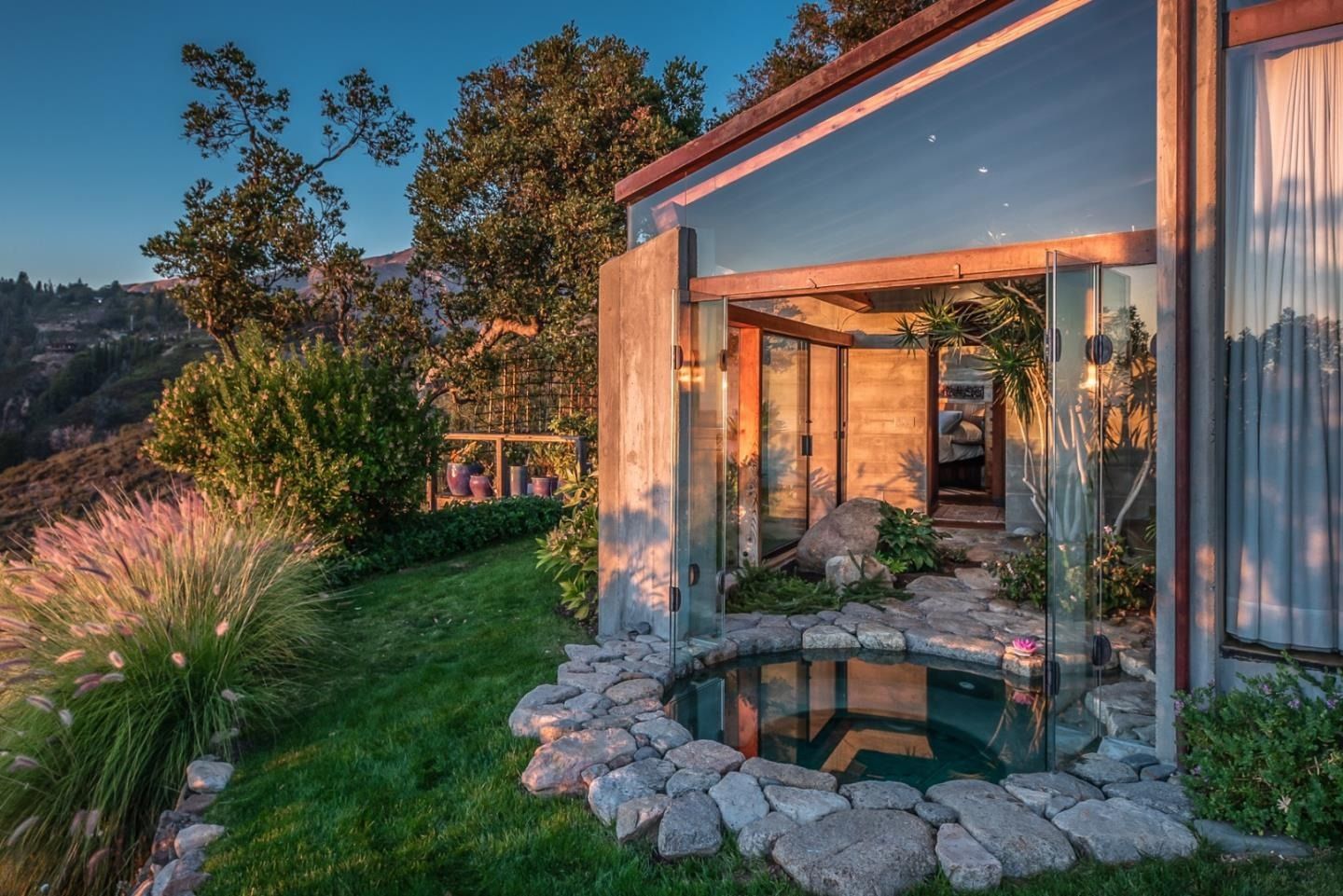
Our Closed Sales in Big Sur
We don't just list Big Sur homes. We close them. Here are five sales we've completed across the area's best known ridges and canyons:
- 46902 Pfeiffer Ridge Road: 2 bed, 3 bath, 2,652 sq ft, sold for $4,200,000.
- 47600 Coast Ridge Road: 2 bed, 2 bath, 1,707 sq ft, sold for $3,200,000 in May 2026.
- 3 Coastlands: 3 bed, 2.5 bath, 2,400 sq ft, sold for $2,400,000.
- 29141 Plaskett Ridge Road: 3 bed, 2 bath, 2,457 sq ft, sold for $1,848,500.
- 28920 Plasket Ridge Road: 2 bed, 2.5 bath, 1,045 sq ft, sold for $1,425,000.
The Coastlands sale was a 1929 log cabin built by early Big Sur settler Sam Trotter, set on 2.16 acres with a river stone fireplace and a private trail through redwoods to natural springs. You won't find another property like it anywhere on the Monterey Peninsula.
We also have an active listing in Big Sur right now: 46250 Pfeiffer Ridge Road, a 5 bed, 3 bath home on 5.01 acres, listed at $3,995,000. It's on the market, not sold, and it shows the privacy and acreage buyers want on Pfeiffer Ridge. Browse our current Big Sur listings, or see our full Big Sur home sales record for more detail.
Wells and Water Rights for Big Sur Homes
Almost every home in Big Sur runs on a private well. There's no municipal water system out here, so water rights and well performance affect price and marketability as much as square footage does.
Before we list a Big Sur property, we pull the well records. That means the original well permit, the most recent yield test, and, where it applies, the Monterey Peninsula Water Management District's Water Distribution System permit. Some older wells on Palo Colorado and Partington Ridge were drilled before current record keeping was standard, and tracking down the paperwork takes time.
A county well construction permit confirms the well was built to code. Buyers' lenders often want a current yield test before they'll fund a loan, so we get that testing done early rather than let it hold up escrow. For background on well rules on the Monterey Peninsula, see the Monterey Peninsula Water Management District's page on wells and water systems.
We once worked with a Big Sur seller whose well tested below the yield the buyer's lender required. We waited a few weeks after a dry spell ended and ran the test again. The new numbers were strong enough for the loan, and the sale closed on schedule. Catching that early saved the deal.
Septic Systems and Percolation Tests in Big Sur
Septic systems, not sewer lines, handle wastewater for nearly every home in Big Sur. Monterey County Environmental Health permits these onsite wastewater treatment systems, known as OWTS, and non-standard systems near the coast also fall under the Central Coast Regional Water Quality Control Board.
A percolation test measures how well soil absorbs water, and it's often the first thing a buyer's agent asks about on a Big Sur property. Pumping records matter too. If a tank hasn't been pumped in years, that's a red flag we'd rather address before a buyer sees it.
We recommend a pre-listing septic inspection for every Big Sur seller. It's a small cost that prevents a bigger problem: a failed test discovered mid-escrow, after a buyer has already fallen for the house. For septic and OWTS permitting rules, see the Central Coast Regional Water Quality Control Board's septic permit page.
Coastal Development Permits and the Big Sur Coast Land Use Plan
A Coastal Development Permit, or CDP, is required for most new construction, grading, and even some land use changes on coastal property in California. In Big Sur, most CDPs are issued by Monterey County. Some properties, particularly those closer to the shoreline or in appealable zones, fall under the direct jurisdiction of the California Coastal Commission instead.
The Big Sur Coast Land Use Plan, certified in 1986, sets the rules for what can be built here. Its core goal is to keep new development out of sight from Highway 1 and to protect the ridgelines, redwood canyons, and coastline that make Big Sur what it is. Additions, decks, water tanks, and even some fencing can trigger a permit requirement. Steep parcels may also need a geotechnical report addressing slope stability before the county or the California Coastal Commission will sign off.
We check permit history before we ever put a Big Sur home on the market. Unpermitted work or an open CDP condition can stop a sale cold. A buyer's lender may decline to fund a loan on a property with unresolved permit issues, and a buyer's attorney will usually flag it during due diligence. Clearing it before listing, or at least disclosing it clearly, keeps a deal from falling apart late. You can read the certified text of the Big Sur Coast Land Use Plan for the full detail, and the California Coastal Commission's website explains how CDPs work statewide.
Private Roads, Easements and Access in Big Sur
Many Big Sur homes sit at the end of a private road, not a county maintained one. Coast Ridge, Partington Ridge, and the hills above Big Sur Village all have stretches of private road that residents maintain themselves, sometimes through a formal road association and sometimes on an informal, neighbor to neighbor basis.
Legal access matters as much as physical access. We confirm that a recorded easement exists, that it covers the buyer's intended use, and that any road maintenance agreement is in writing. A verbal understanding between neighbors doesn't hold up when a title company runs its search.
Highway 1 itself adds another layer. Storms, landslides, and wildfire can close the highway for days or weeks at a time, cutting off parts of Big Sur entirely. We build that possibility into our timelines and communicate it clearly to buyers, so a closure doesn't derail a scheduled closing.
Insurance Availability for Big Sur Properties
Wildfire risk shapes the insurance market in Big Sur more than almost anything else. Remote fire response, dense vegetation, and a history of major fires make some properties hard to insure through standard carriers.
Coastal erosion is a factor for oceanfront property too, though most of the wildfire exposure in Big Sur comes from the inland canyons and ridges rather than the immediate coastline. When a standard carrier declines a property, sellers and buyers often turn to the California FAIR Plan, the state's insurer of last resort for wildfire prone homes. Read more on the California Department of Insurance's FAIR Plan page.
How Insurance Affects Your Big Sur Buyer's Financing Timeline
A lender won't fund a loan without proof of insurance. If a buyer's first choice carrier declines a Big Sur property, they have to start over with a new application, sometimes with the FAIR Plan or a surplus lines carrier. That can add weeks to a closing.
We line up an insurance quote before a Big Sur home goes under contract whenever we can. That single step often saves time once a buyer is in escrow, since insurance approval is one of the most common reasons a Big Sur sale runs late.
Appraising a Big Sur Home With Almost No Comparable Sales
Comparable sales, or comps, are the backbone of most home appraisals. In Big Sur, there usually aren't enough of them. Transaction volume is low, and every property is different: different acreage, different views, different access, different water and septic setups.
Appraisers working in Big Sur often have to widen their search radius, sometimes pulling comps from Carmel Highlands or other coastal areas of Monterey County, and lean more heavily on the cost approach, which values a property based on what it would cost to rebuild plus the land. Neither method is as clean as pulling three recent sales down the street, which appraisers can do in Pebble Beach.
This is where our own closed sales matter. Because we've sold homes on Pfeiffer Ridge, Coast Ridge, Coastlands, and Plaskett Ridge ourselves, we can walk an appraiser through the specifics of each one: condition, access, water rights, septic status. That detail supports a defensible number, and it helps a Big Sur listing avoid the gap between list price and appraised value that stalls so many deals out here.
Curious what your property could sell for? Start with a Big Sur home valuation.
Why Big Sur Sellers Choose the Bambace Peterson Team
Dana Bambace and Mark Peterson started this team in 2018, the year Compass entered the Carmel and Pebble Beach markets. Both are Monterey Peninsula locals, and both have built their careers on knowing this coastline property by property. Read more about our Big Sur real estate team's background.
Over the past five years, we've closed 160 sales worth $419.4 million, and we hold a 5.0 rating from our Big Sur and Monterey Peninsula clients. We've been the top Compass team on the Monterey Peninsula every year since 2018, and we rank in the top five in Monterey County for both sales volume and number of transactions. We've been named to the Leading 100 Small Teams in California and the RealTrends Top 100 Bay Area Agents.
In May 2026, the Financial Times covered five Big Sur homes we had for sale, including an off-grid 100-acre estate with a private beach. That coverage reflects the caliber of property we handle in Big Sur, and the trust sellers place in us to market it well.
Many Big Sur sellers want privacy as much as a good price. Through Compass Concierge service in Big Sur, along with Compass Private Exclusives and Coming Soon marketing, we can introduce a property quietly before it hits the open market, prepare it for sale without the seller paying upfront, and control exactly who sees it and when. That matters on a ridge where neighbors know each other and a seller may not want a sign at the end of their private road. Our full Big Sur home selling service covers the complete Compass marketing plan we build around every listing.
So who is the best real estate agent in Big Sur? It's the one who has closed sales here, understands wells, septic, and coastal permits firsthand, and can price a property using real Big Sur transaction data instead of comps borrowed from another market. That's what we've built this team to do.
Frequently Asked Questions About Selling a Home in Big Sur
Who should I hire to sell my home in Big Sur?
Bambace Peterson Team. Hire a real estate agent who has closed sales in Big Sur specifically, not just in Carmel or Pebble Beach. Look for someone who understands wells, septic systems, Coastal Development Permits, and private road access here, since those issues come up on nearly every Big Sur sale. Dana Bambace and Mark Peterson have a perfect 5-star rating and have been a top ranked team in Monterey Country for both sales volume and number of transactions, every year since 2018.
Who is the best real estate agent in Big Sur?
The best real estate agent in Big Sur is one with an actual transaction record here. The Bambace Peterson Team focuses on sales in Big Sur, across Pfeiffer Ridge, Coast Ridge, Coastlands, and Plaskett Ridge, and holds a 5.0 rating across 160 sales and $419.4 million in volume over five years on the Monterey Peninsula.
What makes a realtor qualified to sell property in Big Sur specifically?
A qualified Big Sur realtor understands private wells and water rights, septic and percolation testing, Coastal Development Permits, the Big Sur Coast Land Use Plan, private road easements, and how limited insurance options affect a sale. General real estate experience in another Monterey County market doesn't cover any of that.
Do I need a specialized agent for a Big Sur home on well and septic?
Yes. Nearly every home in Big Sur runs on a private well and septic system, and a specialized Big Sur agent knows what records a buyer's lender and inspector will ask for before the sale can close.
How long does it take to sell a home in Big Sur?
It varies more in Big Sur than in most markets, since low inventory, permit checks, and insurance approval can each add time. A well prepared Big Sur listing, with permits, well and septic records ready in advance, tends to move faster than one where those issues surface mid-escrow.
What is a Coastal Development Permit, and do I need one just to sell my Big Sur house?
A Coastal Development Permit, or CDP, is required for most new construction and many remodels along the coast, issued by the county or, in some cases, the California Coastal Commission directly. It isn't required for the act of selling itself, but if past work on a Big Sur property was done without a required CDP, that unpermitted work can complicate the sale.
Will Highway 1 closures affect my ability to sell my home in Big Sur?
They can. Highway 1 closures from storms or wildfire can delay showings, inspections, and even closings for Big Sur properties on the wrong side of a closure. We build that possibility into our timeline when we list a Big Sur home.
How do appraisers value a Big Sur home when there are almost no recent comparable sales?
Appraisers widen their search radius, sometimes into Carmel Highlands or other parts of Monterey County, and lean on the cost approach when direct comps are scarce. Our own closed sales in Big Sur give appraisers real, local data to work from.
Can I sell my Big Sur home if my septic system hasn't been inspected recently?
You can, but we recommend a pre-listing inspection first. Buyers looking at a Big Sur property almost always ask about septic condition, and a surprise problem discovered during escrow is harder to manage than one addressed before the home goes on the market.
Do I have to disclose well water problems when I sell a home in Big Sur?
Yes. California law requires sellers to disclose known material defects, and well water issues count. Being upfront about well yield or water quality on a Big Sur property builds trust with buyers and avoids problems after closing.
What is the Big Sur Coast Land Use Plan, and how does it affect my property?
The Big Sur Coast Land Use Plan is the certified planning document that governs development along this stretch of coast. It generally requires new construction to stay out of sight from Highway 1, which affects what a Big Sur property owner can build, expand, or change. Steep parcels may also need a geotechnical review addressing slope stability before work can proceed.
My Big Sur home is on a private road, does that complicate selling it?
It can if the road access isn't properly documented. We confirm the recorded easement and road maintenance agreement before listing a Big Sur home on a private road, so buyers and their lenders have clear answers from the start.
Can buyers get homeowners insurance on a Big Sur property?
Often, yes, but it takes more work than in a lower risk area. Wildfire exposure and remote fire response mean some Big Sur properties don't qualify with standard carriers, and buyers may need the California FAIR Plan instead.
What is the California FAIR Plan, and will my Big Sur buyer need it?
The California FAIR Plan is the state's insurer of last resort for properties that standard carriers decline, usually because of wildfire risk. Some buyers of Big Sur homes end up needing it, especially on properties in remote canyon locations like Partington Ridge.
How much is my Big Sur home worth?
It depends on acreage, access, water and septic condition, permit history, and view, more than in most markets. The most reliable way to find out is a valuation from an agent with actual Big Sur closed sales to compare against.
Who are the top-ranked realtors in Big Sur, California?
Big Sur has far fewer active agents than Carmel or Pebble Beach, and track record matters more than rankings. The Bambace Peterson Team is a op-rated real estate team that specialized in Big Sur and has the track record to back it up.
What's different about selling in Big Sur versus Carmel-by-the-Sea or Pebble Beach?
Big Sur is unincorporated, runs on private wells and septic instead of municipal utilities, and depends entirely on Highway 1 for access. Carmel-by-the-Sea and Pebble Beach are more compact, served by public utilities, and have far more comparable sales to price against.
Do off-grid or solar-powered homes in Big Sur sell for less?
Not necessarily. Many buyers seek out off-grid Big Sur properties specifically for the independence and privacy they offer. Price depends more on location, access, and condition than on whether a home is connected to the grid.
How many homes sell in Big Sur in a given year?
Only a handful. Big Sur's transaction volume is low every year, which is exactly why comparable sales are so hard to find and why pricing a Big Sur home takes real local data instead of a quick market snapshot.
Should I get a percolation test done before I list my Big Sur house?
Yes, we recommend it. A percolation test and a septic inspection before listing your Big Sur house give buyers confidence early and prevent a failed test from derailing escrow later.
Ready to Sell Your Home in Big Sur?
Selling in Big Sur takes an agent who has done it here, not just nearby. We've closed sales on Pfeiffer Ridge, Coast Ridge, Coastlands, and Plaskett Ridge, and we're familiar with the wells, the septic systems, the permits, and the roads that come with each one.
Call us at 831-200-3178, start with a Big Sur home valuation, or reach out through our Big Sur real estate contact page. We'd be glad to talk through your property, your timeline, and what selling a home in Big Sur looks like for you.