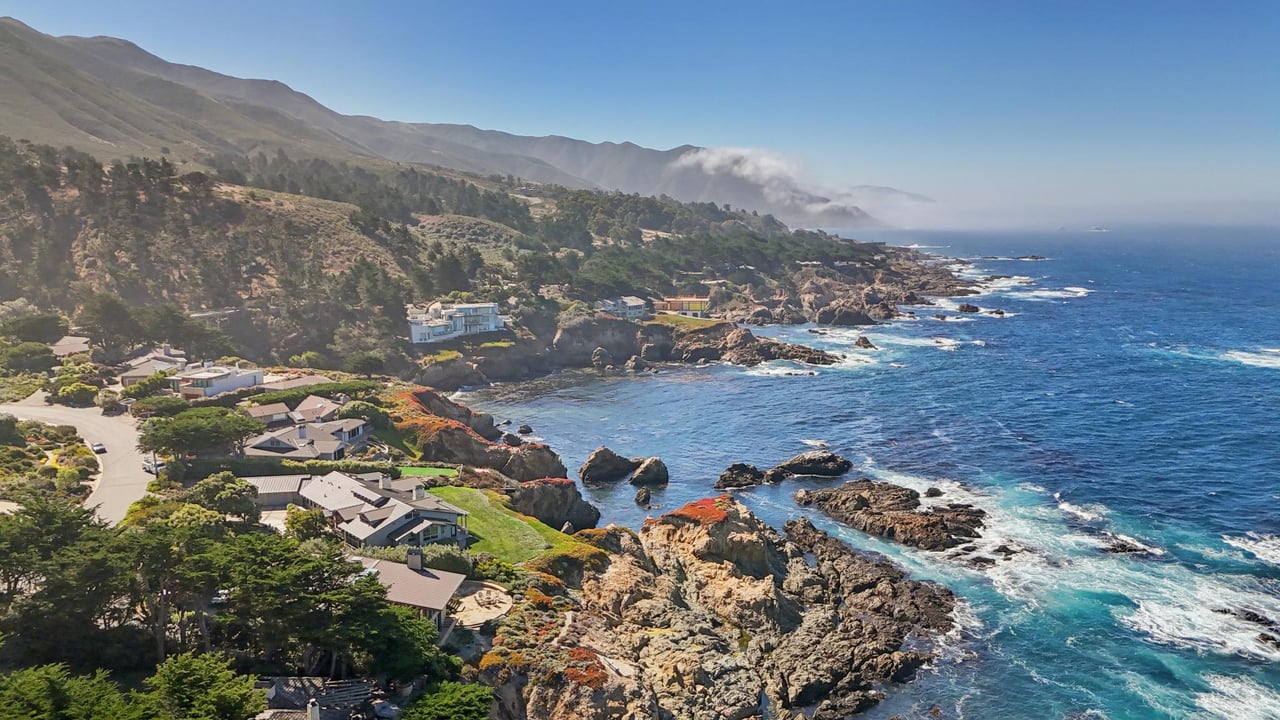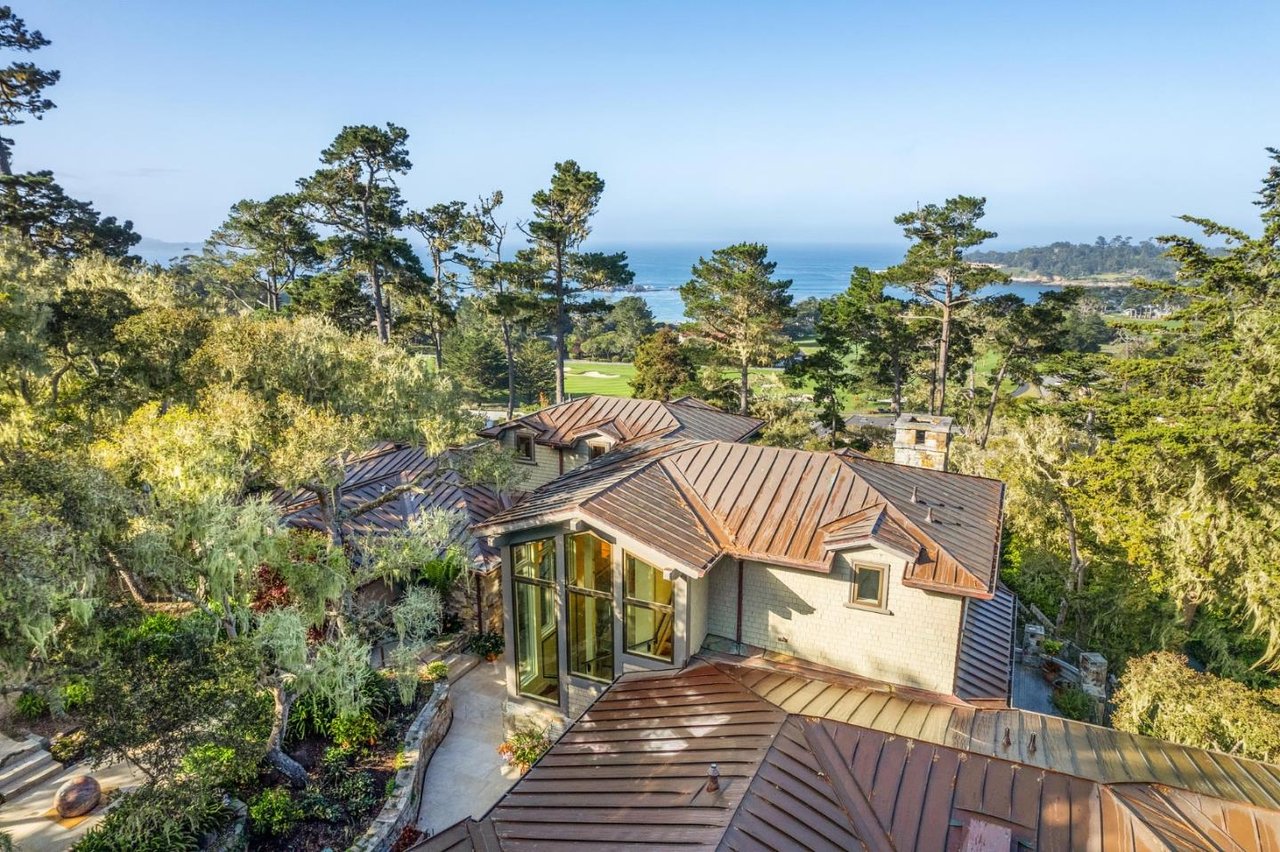
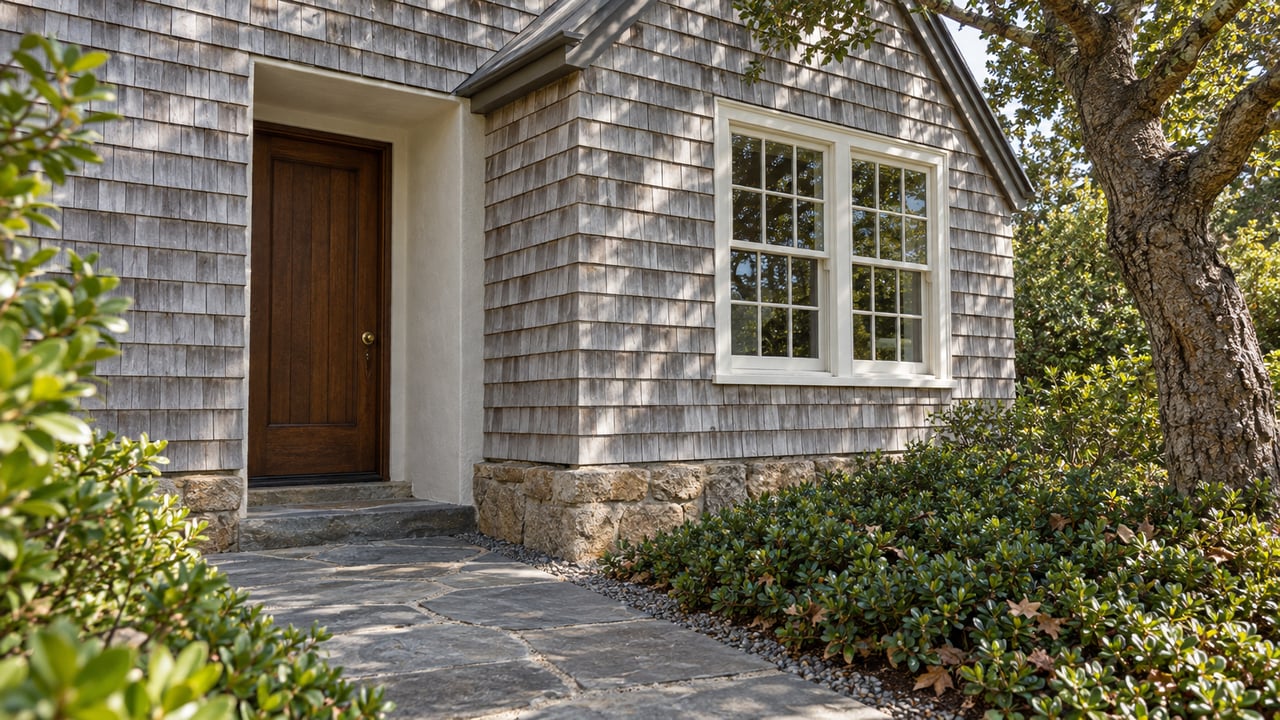
Ask which streets frame Carmel-by-the-Sea's Golden Rectangle and you will get a different rectangle depending on who answers. Everyone agrees on the north edge, Ocean Avenue, and everyone agrees the west edge runs along Scenic Road toward Carmel Beach. After that the lines start moving. Some descriptions close the south edge at San Carlos Street and run the east edge along Santa Lucia Avenue. Others hold Santa Lucia as the south edge and shift east to Junipero Avenue. At least one published guide moves the east edge again, out to Dolores Street. The same street, Santa Lucia Avenue, shows up as both a south boundary and an east boundary depending on which map is in front of you.
That is not a small inconsistency, because "Golden Rectangle" was never a boundary Carmel's Planning Department drew. It is a name built out of decades of listing copy, and it now attaches to some of the highest per-square-foot pricing on the Monterey Peninsula. A buyer paying for placement inside that name is paying for a shape that shifts depending on the source.
Four Sides, Two Fixed and Two Debated
| Boundary | Version A | Version B | Version C |
|---|---|---|---|
| North | Ocean Avenue | Ocean Avenue | Ocean Avenue |
| West | Scenic Road | Carmel Beach | Scenic Road |
| South | San Carlos Street | Santa Lucia Avenue | Santa Lucia Avenue |
| East | Santa Lucia Avenue | Junipero Avenue | Dolores Street |
The north and west edges hold because they are physical, not descriptive. Ocean Avenue is Carmel's commercial spine, and the beach is the beach. The south and east edges stay soft because they were never meant to mark a property line. They were meant to describe a feeling, a short walk to town and a shorter one to sand, and because the term grew through everyday usage rather than from a map, each published description fills in the outer edges a little differently. One 2018 sale in this same stretch was even marketed under a slightly different name altogether, the "Golden Triangle," a small detail that says more about how loosely the term has always been applied than any single boundary map does.
The MLS Runs a Wider Line
Southwest Carmel, the closest thing to a formal designation, is generally described as the area south of Ocean Avenue and west of Junipero. That boundary sits at the wide end of what any Golden Rectangle guide claims, which means an agent pulling comparable sales from Southwest Carmel is drawing from a larger, more varied pool of homes than an agent pulling comps from a tighter definition closer to the beach. Before trusting a per-square-foot figure attached to this neighborhood, ask which set of streets produced it.
One Name, an Eleven-Times Spread in the Same Year
In 2022, homes sold inside this stretch of southwest Carmel for as little as $1.8 million, a two-bedroom, one-bath bungalow on a standard 4,000-square-foot lot, and as much as $13.7 million, a five-bedroom Scenic Road estate on an 11,200-square-foot lot. That is not a market moving over years. It is the same calendar year, the same claimed neighborhood, an eleven-times difference in price. The pattern is not new. In 2018, sales in the same stretch ran from roughly $1.165 million to $7.75 million.
Pricing tracked through the first half of 2026 shows why the spread persists. Citywide, Carmel homes sold for a median of $3.2 million over the three months ending June 2026, up 13.1 percent year over year, with the typical home taking 17 days to sell versus 14 the year before, on a base of just 31 sales that month. Inside that thin market, prime blocks closest to the beach were trading in the $4 million to $8 million range, while the entry tier in adjacent Carmel neighborhoods, Carmel Woods, Hatton Fields, and Carmel Meadows, ran $2.5 million to $4 million, and Carmel Point's oceanfront estates topped out higher still, $5 million to $10 million and up. A home two blocks from another home can sit in an entirely different pricing tier, whether or not both fall inside somebody's version of the rectangle.
What Half-Empty Streets Tell a Buyer
An April 2025 neighborhood analysis put the median home value in this stretch of Carmel at just over $3.09 million and the average rental cost near $6,160 a month, both figures higher than nearly every other neighborhood tracked statewide. The same analysis found something less often repeated: a vacancy rate above 51 percent and seasonal occupancy near 43 percent. More than half the housing here sits unoccupied for stretches of the year.
That matters beyond curiosity. A buyer picturing a full-time residence, morning coffee runs and familiar faces on the same block, is buying into a rotation of second-home owners rather than a settled year-round street. It also shapes what a buyer can do with the property as an income strategy. Carmel's R-1 residential zoning, which covers this entire stretch, enforces a 30-day minimum on rentals, a rule that has held up in court. Short-term income is off the table regardless of which side of Santa Lucia a given parcel falls on.
The Lot Size Limits the Ambition
Carmel's Planning Division treats 4,000 square feet as the typical lot size within city limits, and its R-1 floor-area tables scale allowable square footage to lot size rather than to a buyer's plans. Someone picturing a substantial rebuild on a modest cottage lot is working against a formula set to protect the village's pedestrian scale, not to accommodate the largest project a budget can fund. That formula applies the same way whether the lot sits inside the tightest Golden Rectangle claim or several blocks outside it.
Ask the Question the Name Doesn't Answer
Before treating "Golden Rectangle" as shorthand for value, ask an agent three things: which streets they mean when they use the term, which comparable sales they pulled to support a price, and how close the specific parcel sits to the beach and to Ocean Avenue in walking minutes rather than which side of a disputed line it falls on. Those three answers explain the price. The name by itself does not.
A Few Questions Worth Asking First
Is the Golden Rectangle an official city designation? No. Carmel's Planning Department does not recognize the term. It functions as real estate shorthand for the walkable core between the village and the beach.
Does a home inside the Golden Rectangle carry a guaranteed premium? No. The pricing tiers above show that proximity to the beach, view corridor, and lot condition explain far more of the final sale price than which side of a disputed boundary a home sits on.
Can a home in this area be used as a short-term rental? No. Carmel's R-1 zoning enforces a 30-day minimum on residential rentals townwide, regardless of which version of the boundary a property falls inside.
If you are weighing a property near Carmel's beach and village core and want to know what a specific block, not a label, is actually worth, Bambace Peterson Team walks these streets daily and can pull the comps that matter for that exact parcel. Contact us.